


Heat, Cold, and Blood
Blood is biologically active: high heat accelerates cellular metabolism and red-cell fragility, while freezing causes immediate hemolysis. Every major laboratory sees temperature-stressed samples during seasonal extremes this isn't an at-home problem, it's a blood problem. Rythm's mitigations: packaging designed to buffer thermal swings, overnight express shipping, transit-time monitoring, and inspection on arrival all aimed at shortening the pre-analytical window, the single most important factor in preserving analyte integrity.
Your Part Is Simple
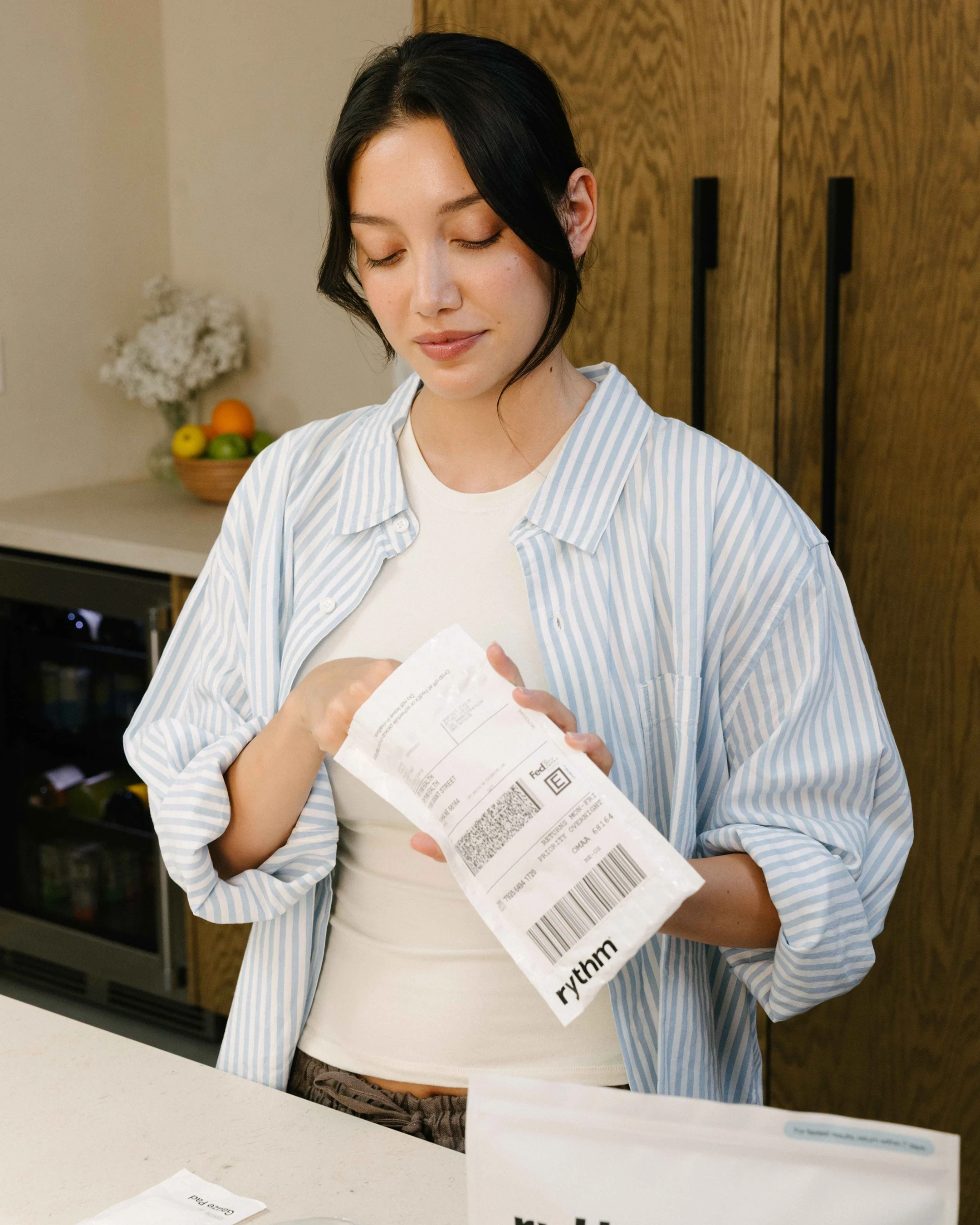
Return the sample promptly, use the scheduled pickup, follow your kit's return instructions around weekends, and don't leave the package sitting in a hot vehicle or mailbox. That's it, the engineering handles the rest. Tip: Get your sample picked up directly by Fedex (Free in the Rythm app), or drop it at an indoor Fedex location/dropbox.
How Long Is My Sample Actually Stable?
There's no single honest number for the whole tube stability is biomarker-specific (~4-7 days), which is why Rythm establishes a validated transportation window for every marker individually (currently ranging from approximately three to nine days). Using your collection time, transit duration, and receipt time, the lab confirms each result is still supportable. A shipping delay doesn't automatically void the sample: if one shorter-window marker falls outside its window, that result is withheld while the rest of the panel is released.
What Happens on Arrival
The sample is received, identified, inspected, and evaluated for volume and integrity. Hemoglobin is measured from whole blood (for men), the remainder is processed to plasma and run on Roche cobas pro systems, and results and flags are reviewed before anything is released to you.