


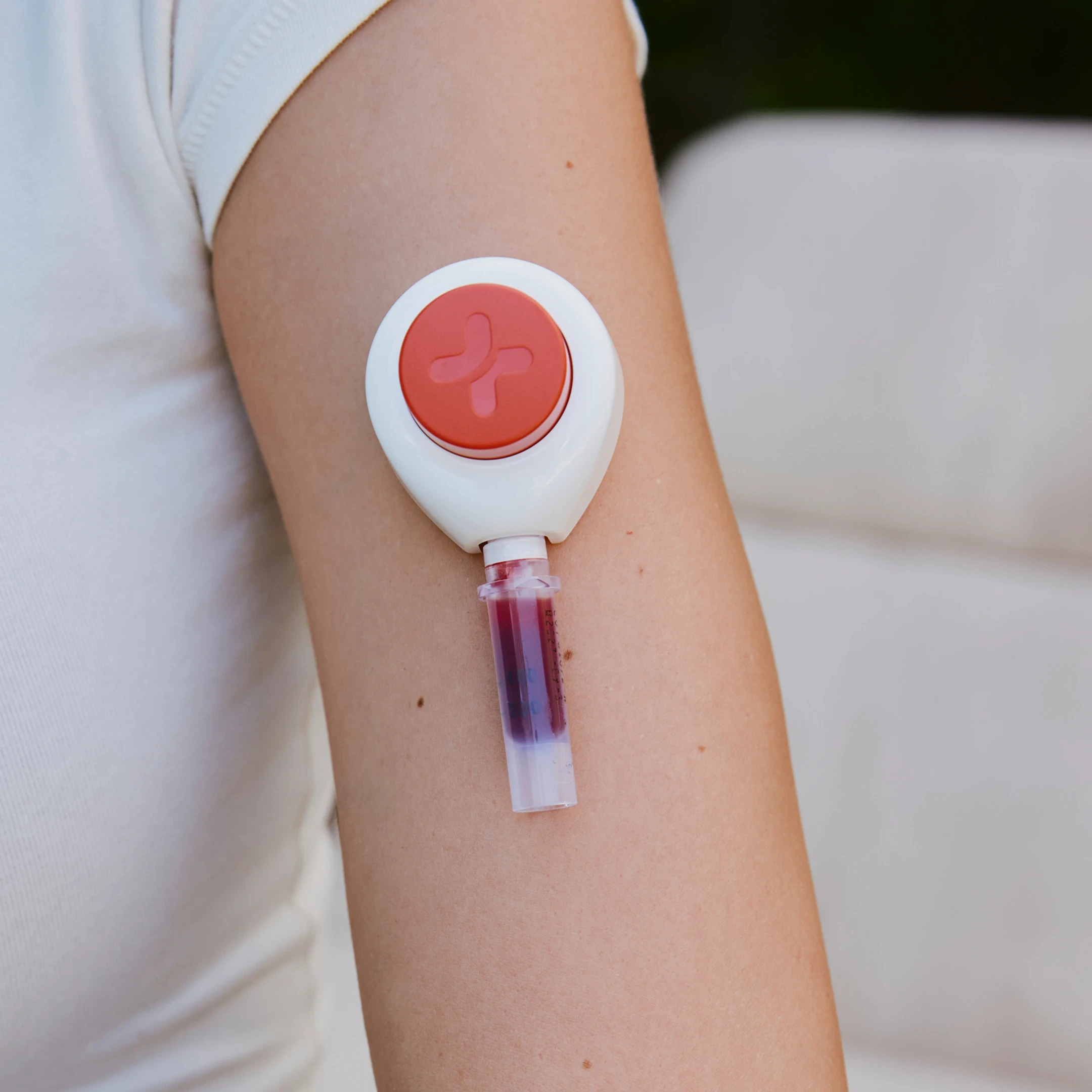
The Volume Myth
Large draws are a consequence of how traditional workflows evolved, not a requirement for accuracy. Standard vacuum tubes hold 5–7 milliliters because that suits venipuncture mechanics and handling. Labs over-collect for repeats and contingencies. Multiple tubes with different additives multiply the total a routine panel can pull 20–30 milliliters when each test actually needs a couple hundred microliters at most. The rest is discarded.
How Rythm Does It
Rythm validates its assays, instruments, and workflows specifically for the volume the Tasso+ collects. A single high-yield collection into a lithium heparin tube can provide enough plasma for more than a 30 measurements lipids, hormones, vitamin D, inflammation, and thyroid function among them. When a run needs repeating, there's typically sufficient volume remaining; in rare cases, we'll simply reach out for a fresh sample.
Does More Blood Mean More Accuracy?
No, not once the lab has enough validated volume for the instrument, quality checks, and any reruns. Accuracy depends on the analytical method and the integrity of the sample, not the size of the tube. Rythm just stopped taking blood it was never going to use.
FAQ
Does Rythm dilute samples?
No.
Is this a dried blood spot?
No, liquid whole capillary blood in a lithium heparin microtube, processed like any clinical specimen.