

2 min read
//
Key Takeaways
Finger pricks collect drops from the fingertip and often need squeezing which raises the risk of hemolysis and interstitial-fluid dilution.
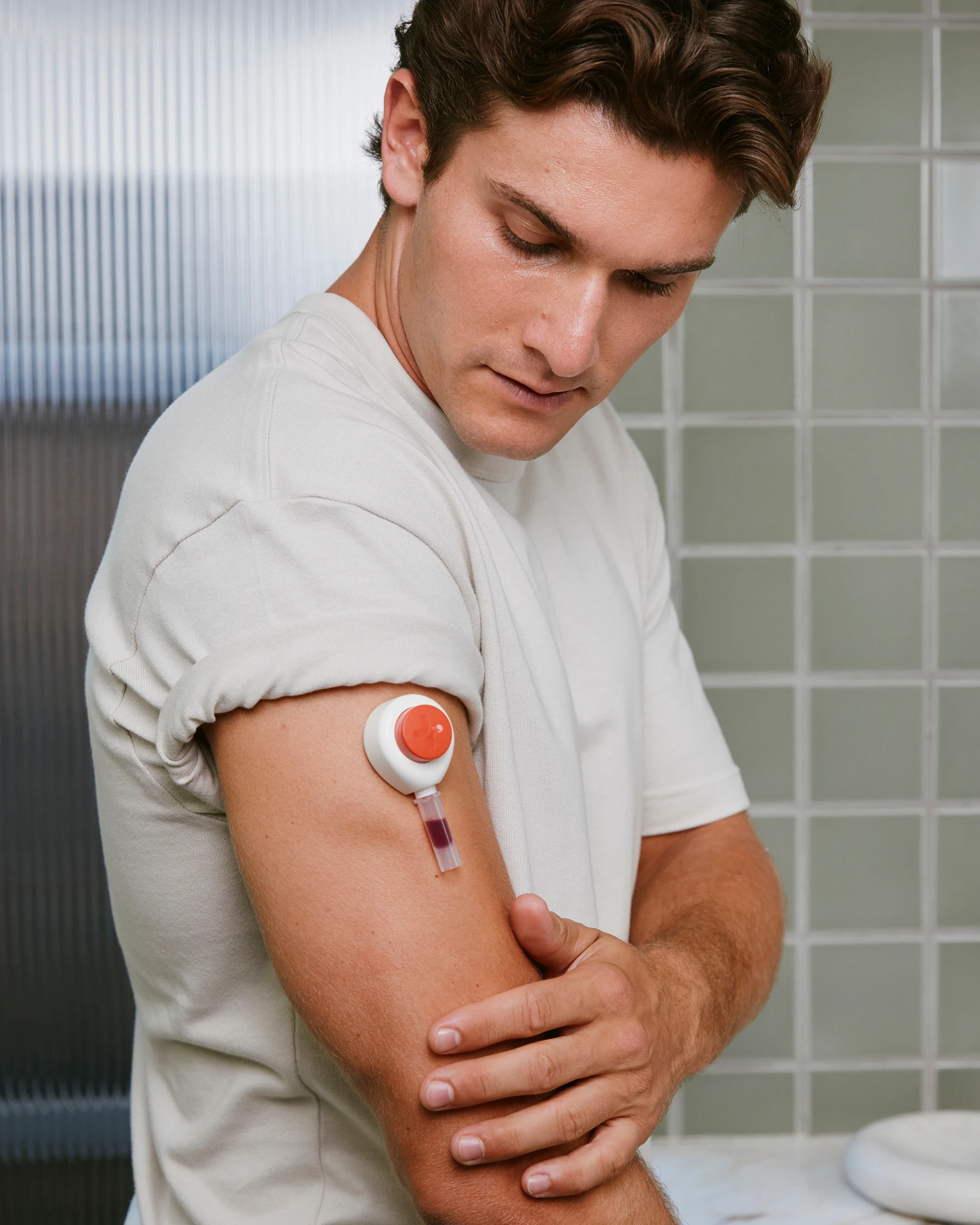
Tasso+ draws liquid blood from the upper arm with a retractable lancet and gentle vacuum, straight into the tube.
More volume, less handling, no “milking” = a specimen a clinical laboratory can treat like any other.
Why the Finger prick?
A finger prick works well when a test needs only a drop or two, glucose strips, rapid tests. Collecting a larger liquid sample from a fingertip is where things get hard: blood flow slows quickly, and squeezing the finger to compensate increases hemolysis and dilutes the sample with interstitial fluid. That doesn't make finger-prick testing inaccurate; it makes it poorly suited to running a comprehensive panel. They are also more painful.
Side by Side
Feature
Traditional finger prick
Tasso+
Collection site
Fingertip
Upper arm
Blood source
Capillary blood
Capillary blood
Mechanism
Blood droplets after lancet puncture
Retractable lancet with vacuum-assisted flow
Manual squeezing
Frequently needed for larger samples
Not normally required
Typical specimen
Dried spot, test strip, or small tube
Liquid whole blood in an attached tube
User handling
Blood often manually transferred
Blood flows directly into the tube
Sample volume
Usually relatively small
Designed for a larger liquid capillary sample
Lab applications
Depends heavily on collection format
Supports multiple validated laboratory assays
One More Advantage: Warmth
Rythm has you warm the upper arm before collection. The resulting vasodilation increases blood flow, so the capillary bed can supply the sample easily no squeezing required. It's a small step that's doing real physiological work, and it's part of why one comfortable collection can power a full comprehensive panel.