

The Five Scenarios
Starting TRT or HRT. Monthly data early in therapy helps interpret trough versus peak effects, watch SHBG shifts, and catch the lipid changes that can accompany androgen or estrogen therapy all aligned with your dosing schedule. Once stable, testing can move to wider intervals.
On GLP-1s or in active weight loss. Trials show month-scale improvements in lipids, CRP, and metabolic markers; monthly sampling shows your early response, its rate, and whether markers plateau or reverse.
During an intensive lifestyle change. Diet, exercise, sleep, stress, and alcohol changes often show up within 4–8 weeks monthly testing reinforces what's working and flags what isn't, early, while your motivation is still hot.
With historically variable numbers. Visit-to-visit lipid variability is itself associated with higher cardiovascular risk, so more frequent sampling helps separate noise from signal.
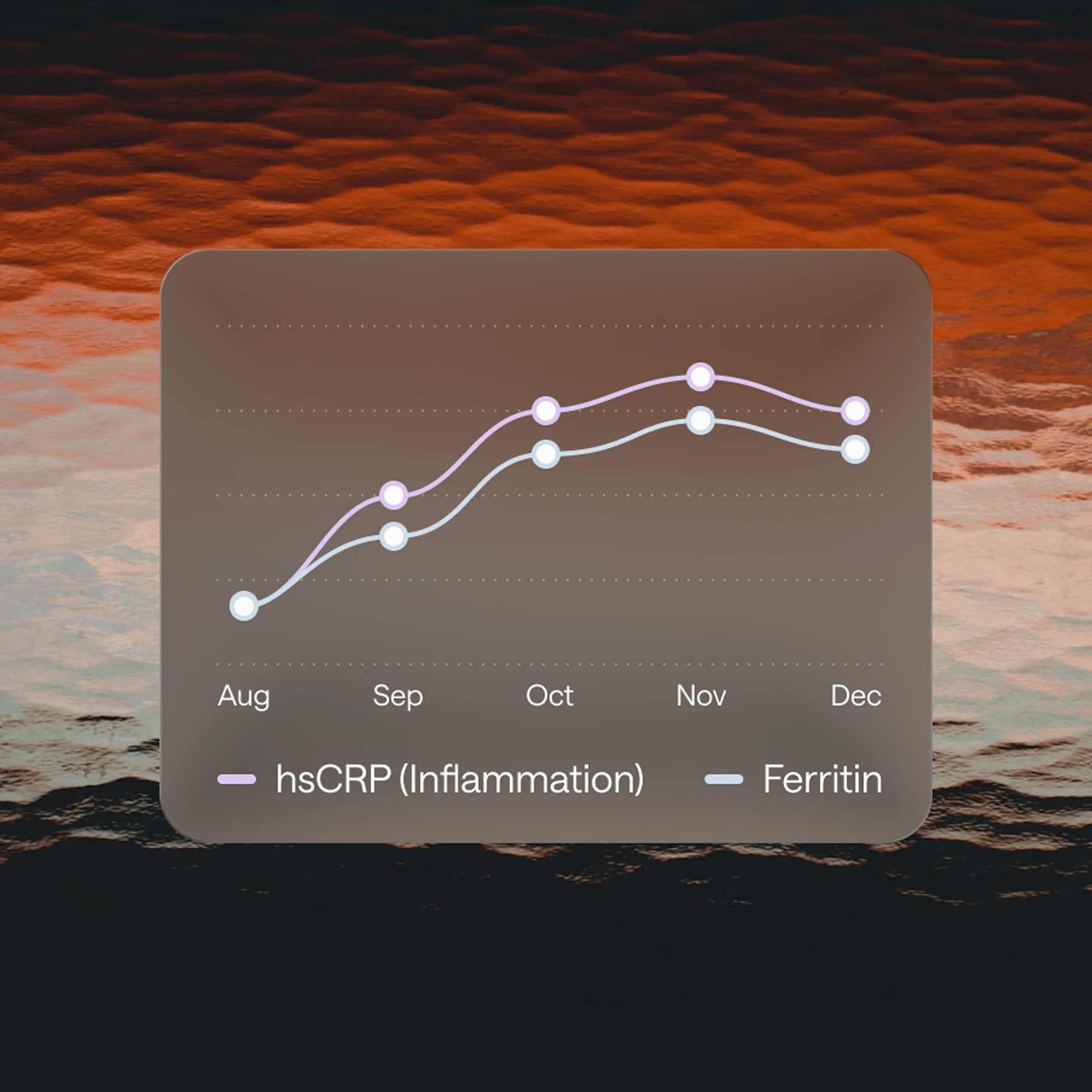
Across a training block. Distinguish adaptive stress from maladaptive (normal training inflammation versus persistently elevated CRP), track lipids against volume, and watch thyroid and sex-hormone dynamics under load then reduce frequency when the cycle ends.
You're not locked into monthly testing forever. The subscription is flexible, skip for up to 90 days or adjust your cadence once the trend is understood. Rythm recommends completing at least three tests first, so the baseline you're comparing against is genuinely yours.