

The Context Stack
Total testosterone is one of the most-requested standalone tests, and one of the easiest to misread alone. SHBG determines how much of it is bound versus free; albumin refines the math; and estradiol matters because some testosterone converts to it. Rythm measures all of these together and calculates free testosterone from them so you see hormone availability, not just a headline number.
For Women
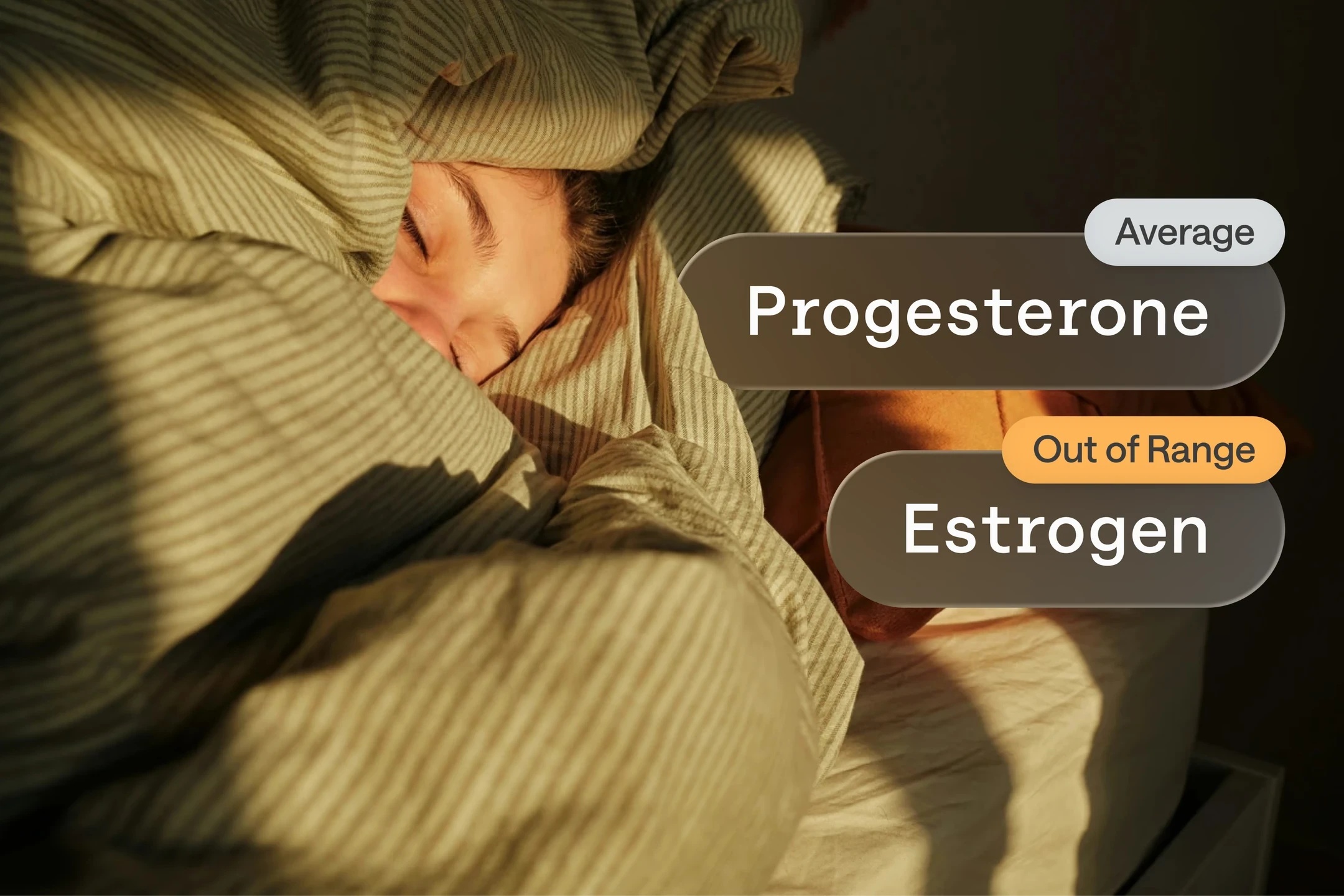
Estradiol and progesterone shift substantially across the menstrual cycle, and their “normal” depends on cycle stage, perimenopause or menopause status, pregnancy, and any hormone therapy. A value that looks high or low may be entirely appropriate for the moment it was drawn which is why Rythm encourages comparing the same approximate cycle stage over time.
On TRT, the Panel Matters More
Treatment can influence estradiol, SHBG, lipids, and because testosterone stimulates red blood cell production hemoglobin and hematocrit; both of which Rythm tracks on the male panel. One hormone number can't monitor a therapy that touches five systems; a connected panel can.
FAQ
Why is my testosterone different from another lab's result?
Testosterone changes with time of day, sleep, illness, calories, exercise, and on TRT timing relative to your dose. Method differences between labs and topical hormone contamination at the collection site can also create substantial discrepancies. Compare same-time, same-method results, and trend within one lab.