

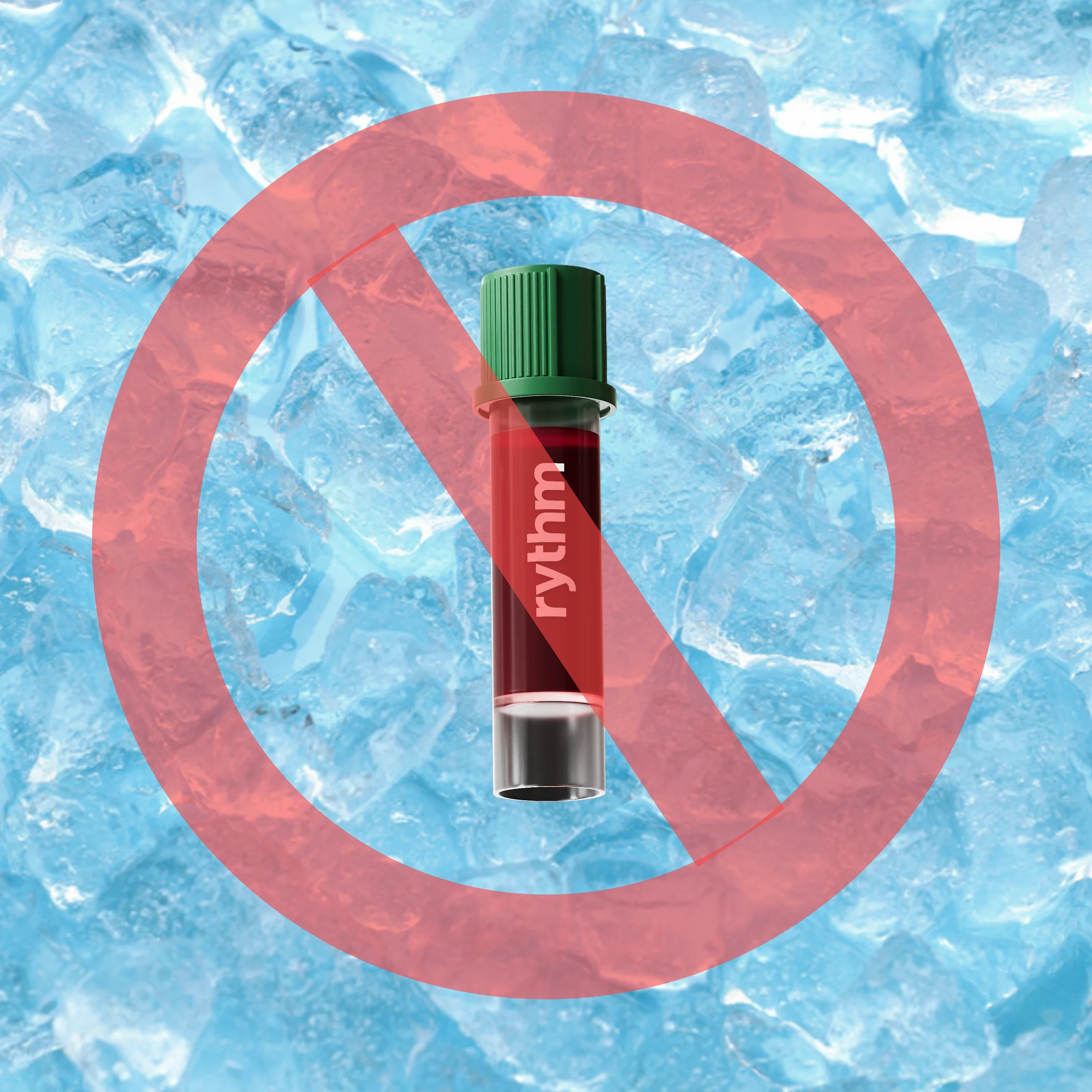
Rythm blood samples do not require refrigeration or cold packs when collected and shipped according to the kit instructions.The goal is to prevent freezing, keep the sample within validated temperature limits and process it within each biomarker’s stability window.
Our shipping requirements are based on stability testing
Our CAP-accredited, CLIA-certified laboratory evaluates each biomarker under defined storage and transport conditions. These studies account for the collection tube, temperature and time before processing, including the period when samples travel as whole blood before plasma separation.
When samples arrive, we assess sample integrity and applicable stability requirements. If a sample exceeds a biomarker’s allowable window or fails its acceptance criteria, the affected result is withheld.
Traditional labs also ship whole blood at room temperature
Major laboratories ship some whole-blood samples at room temperature, depending on the test. For many chemistry tests requiring frozen specimens, laboratories first centrifuge the blood and separate the serum or plasma from the blood cells before freezing.
Traditional labs also use cold packs where appropriate, with specific handling instructions. For example, Quest advises allowing freezer-stored packs to thaw before placing whole-blood samples near them and avoiding direct contact between tubes and cool packs.
Why adding a cold pack could cause problems
Small blood samples can change temperature quickly. A frozen pack can easily freeze the sample. Freezing can rupture red blood cells, causing hemolysis that can distort certain measurements or make affected results unsuitable for reporting.
Even inside an insulated mailer, a small ice pack has limited cooling capacity. It will thaw within hours, well before the shipment reaches the laboratory. The actual duration depends on the pack, insulation and shipping conditions. As its cooling capacity is exhausted, the sample warms toward its surroundings.
This creates a dramatic cooling period followed by significant warming, exposing the sample to a significant temperature fluctuation. Significant temperature swings can damage red blood cells and cause hemolysis. This significantly increases the probability of inaccurate results and sample failures.
The full temperature profile matters: how cold the sample becomes, how much it subsequently warms and how long it spends at each temperature.
An ice pack and insulated mailer may look reassuring, but they can actually increase the risk of inaccurate results.
How to return your sample
Use the supplied packaging, follow the kit instructions and return your sample promptly. Avoid leaving it in a hot vehicle or direct sunlight. Do not add ice or cold packs to the return package.