


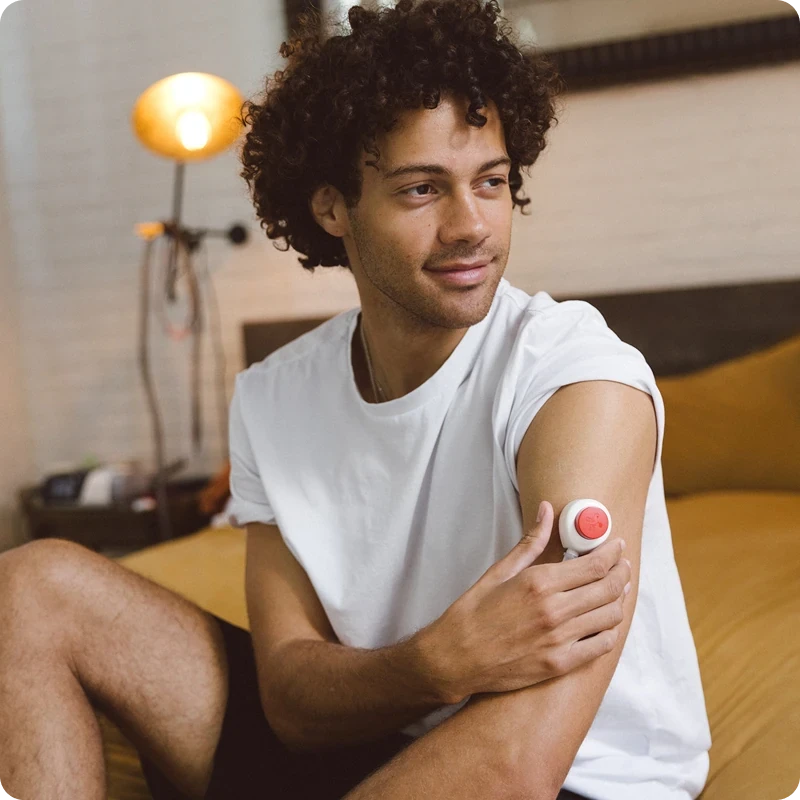
Why Morning Blood Draws Matter
(And Why They Lead to More Reliable Results)
Human physiology is not static. Many biomarkers shift across the day as the body transitions from the fasted, overnight state into the metabolic, endocrine, and behavioral demands of daytime activity. For many biomarkers, including those measured by Rythm Health, the early morning fasting window provides the most stable, controlled, and scientifically interpretable conditions. This article explains why morning draws matter, why traditional laboratories make early appointments difficult to secure, and what can happen when samples are collected later in the day. It also highlights why consistent timing is essential for comparing results across different testing periods.
In this context, a “morning” blood draw refers to collection shortly after waking, before significant physical activity, caffeine intake, or daily routines begin. A “fasted” draw refers to no caloric intake for at least 8 to 12 hours prior to collection. Defining and maintaining these conditions helps ensure that each sample reflects a consistent physiologic baseline.
Why Morning Is the Most Scientifically Stable Time for Blood Collection
Although each marker has its own biological characteristics, several overarching scientific principles explain why morning collection is preferred.
1. Fasting status strongly influences lipid-related markers
Triglycerides, LDL, and even HDL can shift after food intake. Morning fasting draws remove the confounding effects of meals, glycemic variation, and postprandial lipid transport. This makes lipid values more comparable across time.
2. Thyroid hormones vary with time of day
TSH is highest in the early morning and declines as the day progresses. A morning draw captures the most stable and clinically comparable point in the circadian cycle. Testing at different times of day introduces variability that does not necessarily reflect true physiologic change.
3. Sex-hormone values differ between morning and afternoon
Testosterone is naturally higher earlier in the day. SHBG shows mild diurnal variation, and overall hormone-binding dynamics shift with activity, food intake, and stress. Early morning sampling reduces these external influences.
For individuals on testosterone replacement therapy or other hormone replacement regimens, timing is even more critical. Circulating levels depend heavily on where a person is within their dosing interval. Absorption from gels, injections, or pellets produces predictable pharmacokinetic curves. Levels can differ substantially between morning and afternoon if the timing relative to the most recent dose is not standardized. A consistent early morning draw, performed at the same point in the dosing cycle, provides a reproducible framework for interpretation.
4. Albumin and CRP are influenced by hydration, movement, and physiologic state
Albumin concentration reflects plasma volume. Even routine activity, changes in hydration status, or normal daily movement later in the day can shift measured values. CRP is relatively stable over a single day, but inflammatory signaling can fluctuate in response to physiologic stressors, infections, or other transient factors.
5. Consistency across repeated tests is essential for longitudinal interpretation
Many biomarkers are most meaningful when compared to previous values. If one test is drawn at 7 a.m. and the next at 2 p.m., the physiologic conditions are fundamentally different. Morning draws ensure that each time point reflects the same baseline metabolic and endocrine context.
From a clinical perspective, controlling pre-analytic variables is one of the most effective ways to improve signal-to-noise without changing the assay itself.
Why Morning Appointments Are Difficult to Get at Traditional Labs
Although morning sampling is scientifically preferred, traditional draw centers rarely have morning appointments available, and some operate on a first-come, first-served basis. There are several reasons for this:
1. Nearly all fasting tests compete for morning slots
Lipid panels, thyroid testing, hormone assessments, and many general diagnostic tests require fasting, so demand spikes early in the day.
2. Staffing is not scaled for the morning surge
Collection centers often open around 7 a.m. but operate with staffing levels appropriate for the full day, not for the intense surge in morning demand. This creates backlogs, delays, and long wait times.
3. Courier schedules limit available early time slots
Specimens must be packaged and dispatched to central laboratories within specific windows. Morning draws must align with courier pickup schedules, so the schedule is constrained and fills quickly.
4. Real-world schedules make early appointments impractical
Working adults, parents, commuters, and individuals with fixed obligations often cannot arrive at a draw center early in the morning. Even small delays in parking, check-in, or waiting room flow can shift a planned fasting draw well past the ideal window. As a result, morning appointments are scarce and require significant logistical effort to secure.
What Happens If You Do Not Test in the Morning
Testing later in the day alters the physiology you capture, which has meaningful implications for interpretation. Lipid markers can shift after meals, reflecting postprandial physiology rather than a baseline fasting state. Thyroid markers drift throughout the day as TSH declines from its morning peak. Even in stable individuals, afternoon values may be lower than morning values, reducing comparability across tests. Sex-hormone markers differ between morning and afternoon, and SHBG and binding dynamics can shift throughout the day due to activity and food intake.
For individuals on testosterone replacement therapy or other hormone replacement regimens, timing relative to dosing is especially important. If the timing of collection varies from one test to the next, apparent changes in hormone levels may reflect pharmacokinetic fluctuations rather than true physiologic differences.
In general, variability increases and longitudinal comparisons lose precision. If one time point is collected under morning fasting conditions and another under afternoon non-fasting conditions, the results cannot be directly compared. Variability introduced by time of day can overshadow true biologic trends.
How Rythm Makes Morning Testing Simple and Reliable
Traditional laboratory workflows make morning draws difficult. Rythm removes this barrier by allowing you to collect your sample at home immediately after waking, within minutes, with no waiting rooms or appointment constraints. This allows for:
A true morning fasting draw at every collection
Consistent physiologic conditions across testing periods
Reduced variability related to timing, hydration, and daily activity
Greater reproducibility and interpretability of results because you control the timing, environment, and preparation
By removing logistical barriers, Rythm supports a level of consistency that is difficult to achieve through traditional laboratory visits.
In Summary
Morning blood draws are not merely a convenience. They are a scientifically validated strategy for obtaining stable, interpretable, and comparable biomarker measurements. For the markers measured by Rythm Health, early morning fasting samples provide the clearest snapshot of baseline physiology. Traditional laboratory logistics make morning testing difficult, but at-home collection removes that barrier and supports reliable data across all time points.
References on Foundational Physiology and Laboratory Practices
CLSI GP41 – Collection of Diagnostic Venous Blood Specimens. Clinical and Laboratory Standards Institute (CLSI). GP41-Ed7. 2017.
CLSI GP44 – Handling and Processing of Blood Specimens for Common Laboratory Tests. Clinical and Laboratory Standards Institute (CLSI). GP44-Ed6. 2010.
WHO – Best Practices in Phlebotomy. World Health Organization. WHO Press; 2010.
CAP Laboratory Accreditation Checklists. College of American Pathologists. Updated annually.
Tietz Textbook of Clinical Chemistry and Molecular Diagnostics. Rifai N, Horvath AR, Wittwer C, editors. 6th ed. Elsevier; 2018.
Endocrinology References
Bhasin S, Brito JP, Cunningham GR, et al. Testosterone Therapy in Men with Hypogonadism. Journal of Clinical Endocrinology & Metabolism. 2018;103(5):1715–1744.
Diver MJ, et al. Diurnal rhythms of serum testosterone and luteinizing hormone in healthy men. Clinical Endocrinology. 2003;58(6):710–717.
Russell W, et al. Free triiodothyronine has a distinct circadian rhythm that is delayed in hypothyroidism. Journal of Clinical Endocrinology & Metabolism. 2008;93(6):2300–2306.
Lipid and Fasting-State References
Davidson MH, et al. Fasting or nonfasting lipid measurements: A scientific statement from the National Lipid Association. Journal of Clinical Lipidology. 2016;10(5):1241–1244.